felo de se
Night Train“Felo de se” is the Latin expression for self-murder and the heading of Part Two, where the novel examines Jennifer Rockwell’s death through law, statistics, and Mike Hoolihan’s effort to understand what cannot be conclusively known. The phrase carries two meanings at once: it names suicide as an act once treated as a felony, and it exposes the distance between classifying a death and explaining it. In Mike’s account, Jennifer’s death is a crime under the city’s law, yet the coroner’s undetermined finding leaves its final classification unsettled. The expression therefore supplies not a solution but a frame for the book’s investigation of guilt, evidence, and uncertainty.
Meaning and Placement
The phrase appears as the title of Part Two, between the parts titled “blowback” and “the seeing.” Its placement leads into a section headed “THE PSYCHOLOGICAL AUTOPSY,” shifting the investigation from the physical evidence of death toward the conditions, patterns, and possible pressures surrounding it. The Latin term gives that inquiry a legal and historical register before Mike turns to the personal difficulty of accounting for Jennifer’s death.
The book’s use of the expression is not simply a synonym for suicide. It recalls a period when suicide was treated as a criminal offense with consequences extending beyond the death itself. Mike’s reflection describes suicides as having lost their property like other felons, and recalls an older coroner whose work was connected with taxation. In the present, the coroner operates from the Chief Medical Examiner’s office. The institutional setting has changed, but the language of crime continues to shape how the act is understood.
Law and the Coroner’s Finding
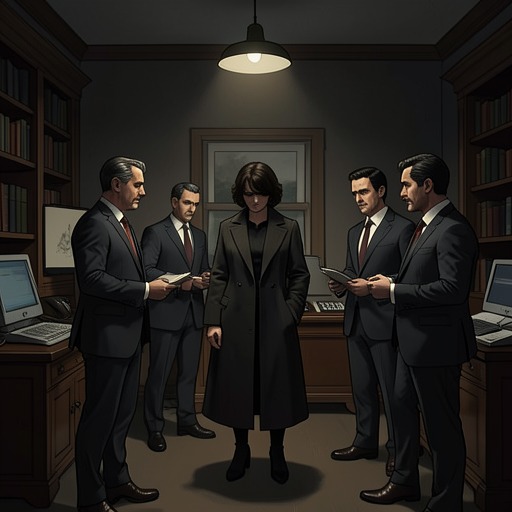
On March 16, Mike observes that people at CID are not discussing the case, as if the investigation had been a defeat. They nevertheless know that Jennifer committed a crime on the night of March 4. He contrasts the city’s treatment with a hypothetical escape across the state line: elsewhere, she might have died without that legal designation, whereas in the city her act is criminal. His account holds two outcomes together: she was not beyond detection, but she escaped punishment and public disgrace.
The legal history behind the phrase sharpens this distinction. Mike recalls that, in an earlier period, people who died by suicide could lose everything they owned as felons. Modern procedure does not reproduce that penalty in the episode he describes. Jeff Bright, the coroner at the Chief Medical Examiner’s office and a friend of Tom Rockwell, returns an undetermined finding in Jennifer’s case. Colonel Tom had pressed for an accidental ruling but ultimately accepted the undetermined classification, as did the others. The finding settles neither the moral question nor the cause of death; it records the limit of what the official determination will claim.
Mike’s language makes that limit personal. He says he feels no need to judge Jennifer and connects suicide with a collapse in which choice may seem to disappear. That position does not erase the criminal designation he has just described. Instead, the tension between law’s naming and his refusal to condemn her becomes central to the phrase: the same death can be classified as a crime while remaining, to him, beyond simple moral judgment.
Statistics and Their Limits
In the psychological autopsy, Mike tests general findings against what he knows of Jennifer. He notes that suicide risk varies with age rather than rising evenly, describing a relatively level period through the twenties before a later increase. Jennifer was twenty-eight. He also records estimates that about half of those who die by suicide have attempted it before, about three-quarters give warning, and about nine-tenths have histories of escape. As far as he knows, Jennifer had not attempted suicide before and gave no warning; he remembers her as someone who saw things through.
Those comparisons do not establish what happened inside Jennifer or why she died. Mike emphasizes that suicide is strongly affected by available means, then notes that Jennifer owned a gun. He considers conflicting estimates of how often people who die by suicide leave notes, and the possibility that relatives may remove them. Although Jennifer apparently left no note, Mike believes she wrote one. The difference between what the file establishes and what he feels is true remains open; neither statistics nor intuition supplies the missing document or a settled explanation.
His notes also bring group patterns into view without turning them into individual causes. Mike considers gender differences in attempts and deaths, correcting Tony Silvera’s claim that suicide is a women’s matter: attempts are more common among women, while completed suicides are more common among men. He singles out Mother’s Day as an exception in the pattern he describes, when the risk is greater for women, and speculates about women absent from family meals or separated from their children. The observation is framed as a question about social circumstance, not as a demonstrated account of Jennifer’s motives.
Mike similarly reflects on suicide rates in professions associated with exposure to death, illness, suffering, or access to means. He notes elevated rates among psychiatrists and other professional groups, and considers whether power, role strain, or the loss of power after retirement might matter. These are hypotheses prompted by statistics, not findings about Jennifer. The phrase “felo de se” gathers such attempts at explanation while leaving intact the gap between population patterns and an individual death.
The Search for a Cause
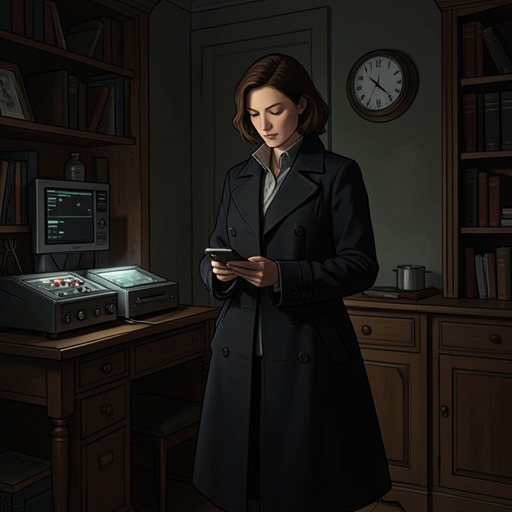
After the funeral, Mike compiles a list titled “Stressors and Precipitants.” Its first entries ask whether there was a significant other, naming Trader Faulkner and wondering what he might not have seen, and whether money was involved. Later he considers another significant other, Arn Debs, and possible dimensions of mental health: psychological, organic, or metaphysical. The list shows an investigator trying to separate possible pressures from possible underlying conditions, but the questions do not become answers.
Mike eventually crosses out each proposed mental-health category, as well as the entry concerning Arn Debs. The page is left with nothing. This act of erasure does not prove that Jennifer had no difficulties; it shows that Mike cannot establish a cause from the categories he has assembled. Earlier, he remembers Jennifer as distressed during a period in her late adolescence, when a spurned boyfriend would not let go and a housemate had also become troubled. Even then, despite being frightened, Jennifer came to read to him and care for him. The memory makes her capacity to tend to another person part of Mike’s knowledge of her, but it does not explain her later death.
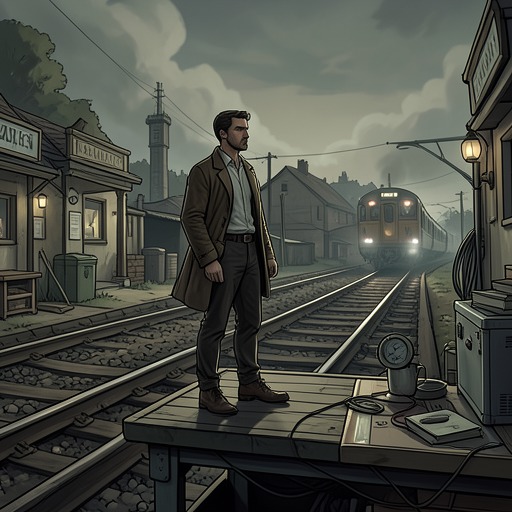
The section’s night-train image gives the investigation a recurring figure for suicide as a one-way passage into darkness. At the end of Mike’s search, he realizes that the train must already have passed: Jennifer died the previous evening, and the recognition arrives too late to alter the outcome. The final note that the sky was clear and visibility excellent places visual clarity beside psychological uncertainty. The expression names the act in the language of law, but the psychological autopsy cannot make its cause equally visible. Its force lies in that unresolved contrast: a death can be recognized, classified, and investigated, while the person’s decisive why remains beyond the evidence.